Why food transitions cause diarrhea
Puppy gut bacteria adapt to whatever food the puppy is eating. The bacterial populations that digest one formulation aren't the same ones that handle a different one. When you switch foods, those populations have to shift — some species expand, others contract, and the transition produces gas, loose stool, and sometimes outright diarrhea.
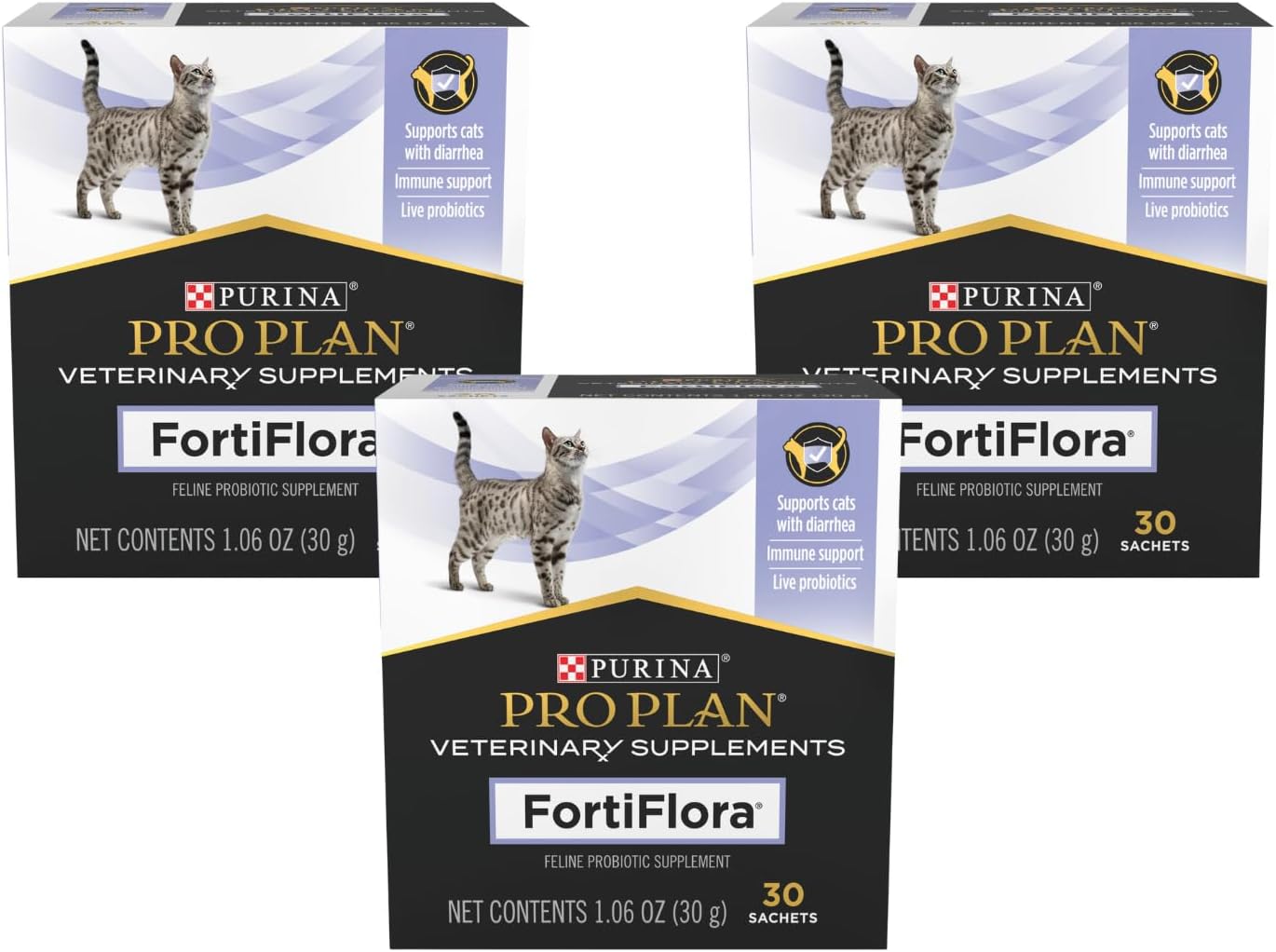
This is normal. Around half of puppies show some GI symptoms during food transitions. Most resolve on their own within 7-10 days. FortiFlora reduces both the severity and duration.
When to start FortiFlora for a planned switch
The best timing is 2-3 days before you begin the food change, not on the day of the switch. Starting early gives the gut a head start — beneficial bacteria are established and ready to handle the new ingredients before they arrive.
A typical schedule:
- Day -3: Start FortiFlora at full dose (one packet daily) with current food
- Day -2: FortiFlora + current food
- Day -1: FortiFlora + current food
- Day 0: Begin transition — 75% old food, 25% new, with FortiFlora
- Day 3: 50/50 split, continue FortiFlora
- Day 6: 25% old, 75% new, continue FortiFlora
- Day 9-10: 100% new food, continue FortiFlora for 5-7 more days
- Day 14-17: Stop FortiFlora; food transition complete
This is the most reliable approach for a smooth transition.
When the switch is unplanned
Sometimes you have to switch food without lead time — a brand discontinuation, supply issue, or vet recommendation. Start FortiFlora day 1 of the switch.
For unplanned switches:
- Begin FortiFlora the first day of new food
- Continue daily through the full transition period
- Plan on 10-14 days of FortiFlora total
- Expect slightly more GI symptoms than with a planned transition, but still much less than without supplement support
Going from puppy food to adult food
The transition from puppy to adult food (typically at 9-12 months for small/medium breeds, 12-18 months for large breeds) often produces more GI symptoms than other switches because:
- The protein and fat ratios change
- Adult formulas often have more fiber than puppy ones
- The gut bacteria adapted to puppy nutrition need to shift to adult patterns
FortiFlora helps significantly with this specific transition. The 2-3 day pre-loading approach works particularly well here.
Switching between brands
Some brand-to-brand switches are smoother than others. A few patterns:
Same protein source, similar ingredients: Usually quick transition, mild symptoms even without supplement support. FortiFlora optional but helpful.
Different protein source (chicken to fish, for example): Often produces more symptoms. FortiFlora recommended.
Conventional kibble to grain-free or vice versa: Significant ingredient difference; supplement recommended.
Conventional kibble to limited-ingredient formula: Variable — depends on what's being eliminated. Supplement helps.
Kibble to fresh/raw or vice versa: Major transition. Strong case for FortiFlora support.
Switching for allergy or sensitivity reasons
If you're transitioning food because your puppy has shown sensitivity to the current diet, FortiFlora is especially valuable. The existing gut imbalance plus the food change can compound into significant diarrhea.
For allergy-driven switches:
- Start FortiFlora 2-3 days before the new food, if possible
- Continue 2-3 weeks past the full transition
- Watch for resolution of the original sensitivity symptoms
If the new food is genuinely better for your puppy, you should see overall GI symptoms improve over 3-6 weeks. FortiFlora supports this transition.
What if the transition isn't going well
If your puppy is showing significant diarrhea despite FortiFlora during a food transition:
Slow down the transition. Go back to an earlier mix ratio (50/50 instead of 25/75) and stay there longer. The gut needs more time.
Add bland diet temporarily. A few days of boiled chicken and rice plus the FortiFlora, then resume the food transition once stool firms.
Reassess the new food. If symptoms continue despite slow transition and probiotic support, the new food may not be the right fit for your puppy. Some food sensitivities only become clear during transition.
Check for unrelated causes. Vaccination, parasites, stress — anything else changed at the same time?
What FortiFlora won't help with
A few transition issues that aren't probiotic-related:
True food allergy reactions — facial swelling, hives, severe itching. These need vet attention regardless of probiotic use.
Sudden complete refusal of new food — flavor preference issue, not a GI issue. Probiotic won't change the dog's mind about taste.
Vomiting — single episode probably fine, repeated vomiting during transition is more concerning. Vet visit if it persists.
Lethargy or refusal to drink — beyond what a probiotic can address. Vet visit.
After the transition completes
Once your puppy is fully on the new food and stable for 7-10 days, you can stop FortiFlora. Some puppies maintain stable stool after stopping; others gradually return to occasional softer stools.
If your puppy was sensitive before and you want ongoing gut support, transitioning to a multi-strain probiotic (Proviable-DC, Honest Paws Pre+Probiotic) for ongoing daily use is reasonable. FortiFlora is best for the transition window specifically; daily multi-strain is better for long-term maintenance.
Bottom line
FortiFlora cuts food transition diarrhea significantly. Best results come from starting 2-3 days before the switch begins and continuing 5-7 days past full transition. For most puppy food changes, this approach produces a smooth, low-symptom transition.
When to call your vet
- Severe diarrhea during food transition lasting more than 3-4 days
- Vomiting plus diarrhea during transition
- Refusal to eat the new food after 5-7 days at higher mix ratios
- Hives, facial swelling, or other allergic signs after starting new food
- Blood or mucus in stool
- Puppy becoming lethargic, dehydrated, or losing weight during the transition