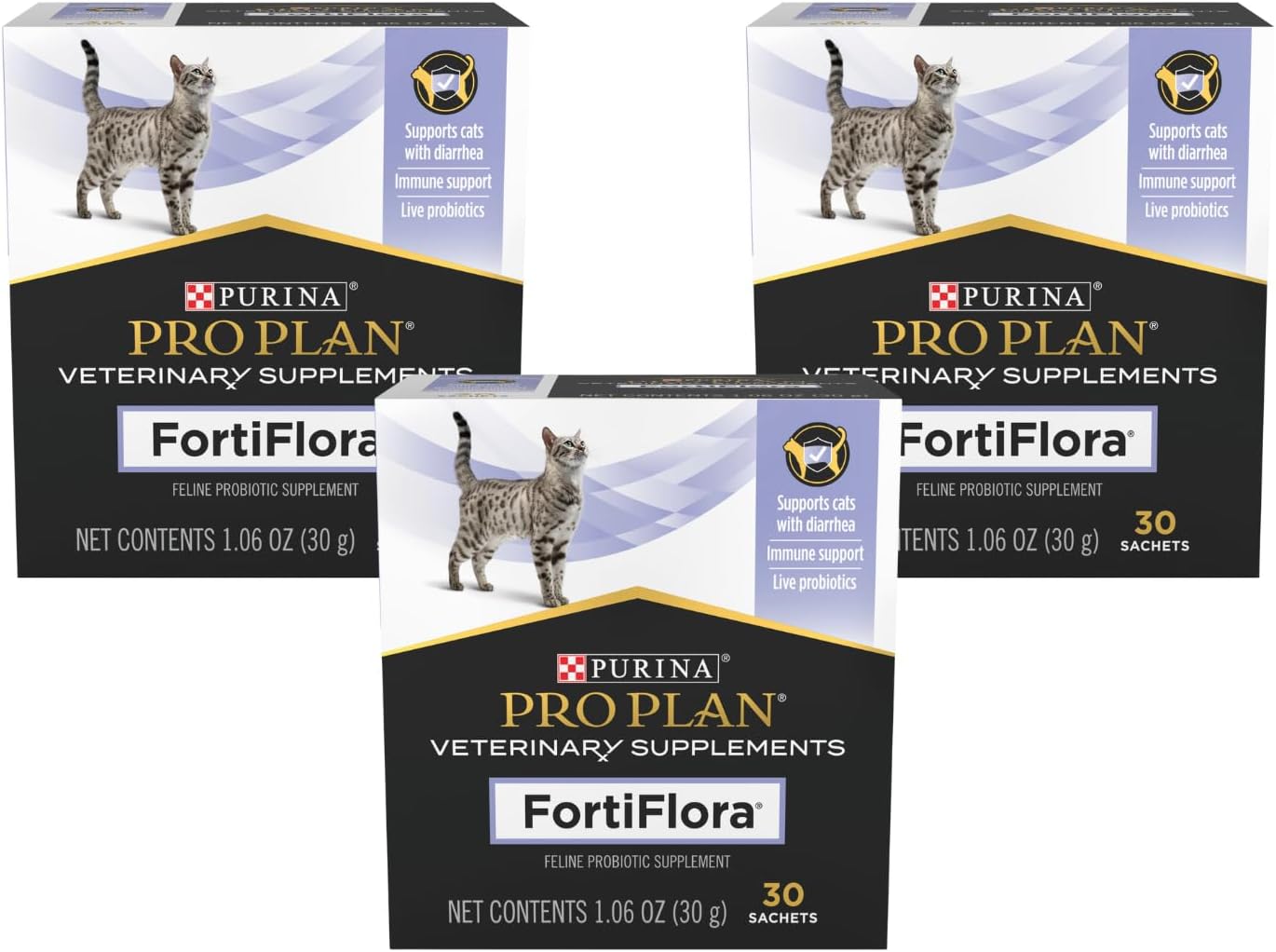
Probably not the supplement
FortiFlora more commonly produces looser stool than constipation. The bacterial population shift usually results in more frequent or softer bowel movements during the adjustment week, not the opposite. When constipation appears alongside starting the supplement, the cause is usually something else that happened around the same time.
Three common explanations:
Cause 1: Reduced water intake
Many dogs drink less when their food is changed in any way — including the addition of a supplement. If your dog is eating slightly less or finding the food slightly less appealing, they may also be drinking less. Less water means harder, drier stool, which means straining.
Check: How much water has your dog been drinking compared to baseline? Is the bowl getting refilled less often?
Fix: Encourage water intake. Add water to the food (creating a slurry rather than dry kibble with supplement). Add a small amount of low-sodium chicken broth to the water bowl. Offer ice cubes — some dogs enjoy these.
Cause 2: Coincidental dietary change
Did you also change food brand, formula, or amount around the same time you started FortiFlora? Many constipation cases attributed to the supplement are actually about the food change. New foods take time for the gut to adapt to, and that adaptation sometimes runs through constipation before settling.
Check: What else changed in your dog's routine in the week before constipation appeared?
Fix: Stabilize the diet. Don't change food during the supplement adjustment period. If you've already changed both, give it 7-10 days to settle.
Cause 3: Previously loose stool firming up too much
Some dogs were having mildly loose stool before starting FortiFlora. The supplement firms stool, sometimes more than expected. The dog isn't actually constipated — the stool is just much firmer than what the owner is used to seeing.
Check: What did your dog's stool look like before starting the supplement? If it was consistently soft, the new firmness might be normal.
Fix: Watch for stool that's normal-firm versus genuinely hard/dry. If the dog is passing stool without significant straining and the volume is reasonable, the firmness is actually a sign of improved gut function, not constipation.
When it actually is constipation
Real constipation has specific signs:
- Straining repeatedly without producing stool, or producing only small dry pellets
- No bowel movement for more than 48 hours
- Visible discomfort or pain when trying to defecate
- Reduced appetite associated with feeling backed up
- Lethargy in severe cases
These signs warrant attention regardless of supplement context.
What FortiFlora can't cause directly
The probiotic mechanism doesn't slow gut motility. The bacteria in the supplement don't produce constipation-inducing compounds. Several things rule out direct causation:
- Adding bacteria to the gut increases fermentation, which generally speeds motility
- The strain isn't known to produce bowel-slowing metabolites
- Clinical experience with thousands of dogs on FortiFlora hasn't shown constipation as a typical pattern
- When constipation appears, controlled trials show it's usually unrelated to the supplement
What to actually do if your dog is constipated
If your dog has genuine constipation (real straining, hard pellets, more than 48 hours without stool):
Increase water intake. Most cases respond to better hydration alone. Add water to food, offer broth, encourage drinking.
Add a small amount of plain canned pumpkin (not pie filling). A teaspoon for small dogs, a tablespoon for medium, two tablespoons for large. Fiber softens stool.
More exercise. Walking helps gut motility. Even a 15-minute walk twice daily can produce results.
Reduce dry treats. If your dog is getting lots of dry chews or treats, these contribute to dry stool.
Wait 24 hours and reassess. Most mild constipation resolves with hydration and patience.
Call the vet if:
- No bowel movement for more than 48-72 hours
- Severe straining with pain
- Vomiting alongside constipation
- Blood in any small amount of stool that's passed
What you should NOT do
A few things to avoid:
Human laxatives or stool softeners. Some are dangerous for dogs (Senna, magnesium citrate, polyethylene glycol unless vet-prescribed). Don't give human OTC laxatives.
Enemas at home. Risk of injury, dehydration. This is a vet procedure.
Stop FortiFlora abruptly without other troubleshooting. Probably not the cause. Stopping won't resolve the constipation if something else is going on.
Add multiple new things at once trying to fix it. One change at a time, evaluate, then adjust if needed.
When constipation suggests something bigger
Some patterns mean the constipation isn't dietary at all:
Repeated constipation episodes over weeks or months. Could indicate megacolon, pelvic issues, or chronic dehydration. Needs vet evaluation.
Senior dog with new constipation. Could be developing kidney disease, hypothyroidism, or other systemic issues affecting bowel function. Bloodwork warranted.
Constipation plus appetite loss and weight loss. Possible GI obstruction or mass. Urgent vet visit.
Recently medicated dog with constipation. Some medications (opioids, certain antihistamines) cause constipation directly. Check what else your dog is on.
Dog who's eaten foreign material. Cloth, bones, or other indigestible items can produce partial obstruction that mimics constipation. Vet visit.
A practical approach for the dog with mild constipation on FortiFlora
If your dog has mild constipation since starting the supplement and no other concerning signs:
- Increase water intake actively
- Add a teaspoon of plain pumpkin daily
- Keep regular exercise
- Don't stop FortiFlora — give it 5-7 days to see if the constipation resolves
- Don't add other supplements simultaneously
- Reassess at day 7
Most cases resolve within a week with these basic adjustments.
Bottom line
Constipation isn't a typical FortiFlora effect. When it appears alongside starting the supplement, the cause is usually reduced water intake, coincidental dietary changes, or previously-loose stool now firmer than the owner expects. Increase hydration, add a bit of fiber, give it a week. For true persistent constipation, this isn't a supplement question — it's a vet visit.
When to call your vet
- No bowel movement for more than 48-72 hours
- Severe straining with visible pain
- Vomiting alongside constipation
- Constipation plus appetite loss or weight loss
- Senior dog with new constipation pattern
- Repeated constipation episodes
- Constipation in a dog who may have eaten foreign material
- Constipation persisting after hydration and fiber adjustments