What "immunocompromised" actually covers
The label gets applied broadly, and the right answer about FortiFlora depends on which kind of immune compromise we're talking about. A few common categories:
Dogs on routine immunosuppressants. Long-term low-dose prednisone, cyclosporine for atopic dermatitis, azathioprine for autoimmune conditions. These dogs have modulated immune function but aren't profoundly suppressed.
Dogs on aggressive immunosuppression. High-dose prednisone for IMHA or IMTP, multiple immunosuppressants combined, cyclosporine at full dose. These dogs have meaningfully reduced immune function.
Dogs on chemotherapy. Variable depending on protocol. Some chemo agents produce significant neutropenia; others have minimal immune impact.
Dogs with diseases that affect immune function. Chronic kidney disease, hyperadrenocorticism (Cushing's), diabetes mellitus poorly controlled.
Senior dogs. Mild immune senescence with age. Usually not enough to change probiotic recommendations.
The risk of giving any live-culture probiotic varies across these groups.
The general safety case
Enterococcus faecium SF68 is non-pathogenic in healthy animals and in the vast majority of immunocompromised ones. Several factors support safety:
The strain doesn't cross the gut wall in normal conditions. It colonizes the gut lumen, not bloodstream or tissues.
It's not associated with opportunistic infection in dogs. Decades of veterinary use have not produced concerning reports.
The dose is modest. Each packet contains millions of CFU but the bacteria don't multiply unchecked — they establish a colony in equilibrium with existing flora.
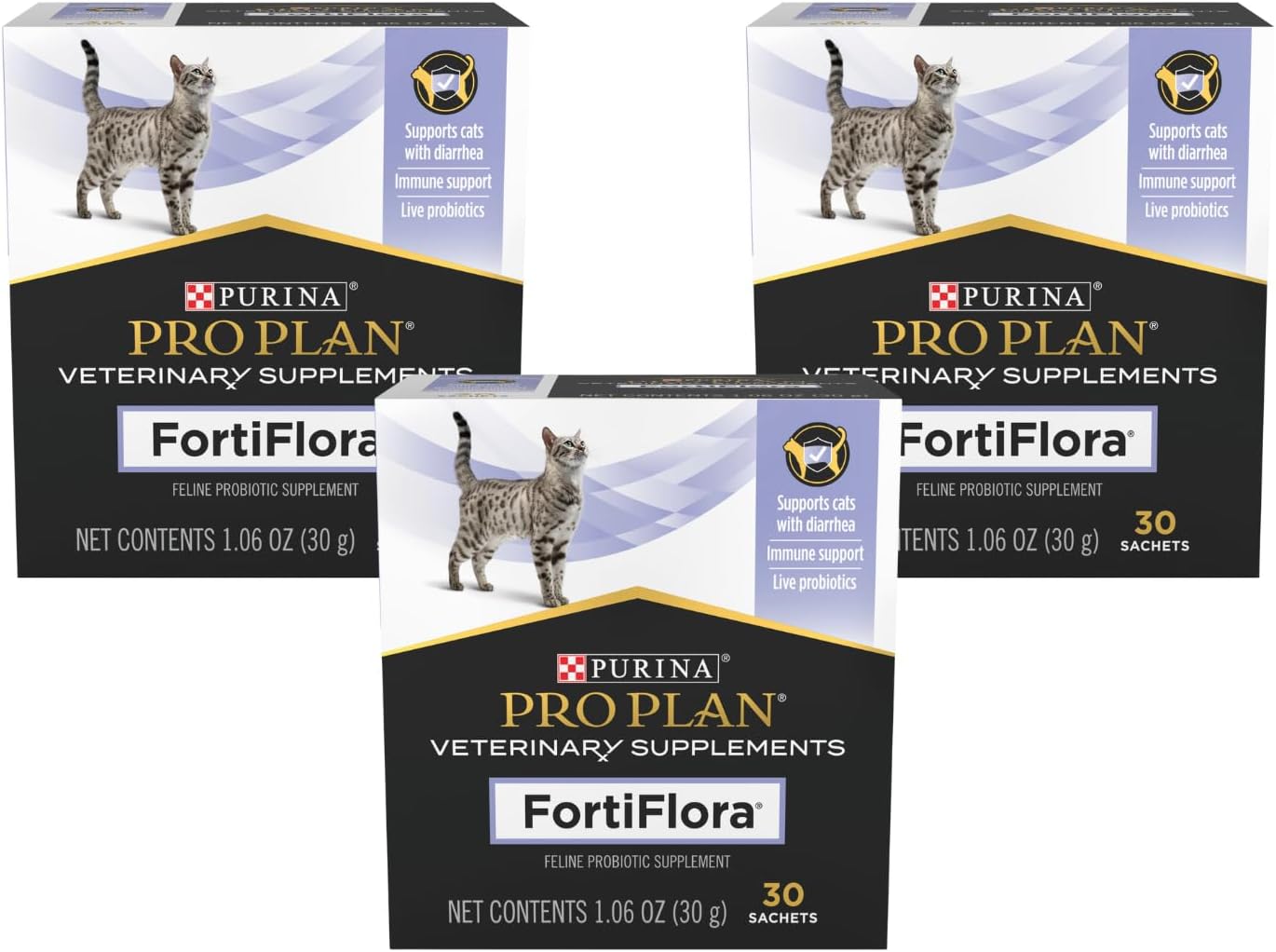
For most immunocompromised dogs, FortiFlora is reasonably safe and the benefit (gut flora support, reduced GI side effects of immunosuppressants) usually outweighs the small theoretical risk.
When to use FortiFlora despite immune compromise
A few common scenarios:
Dog on long-term low-dose prednisone for allergies or IBD. GI side effects of long-term steroids are common; probiotic support helps. Generally safe.
Dog on cyclosporine for atopic dermatitis. Cyclosporine commonly causes GI upset, especially during ramp-up. FortiFlora reduces this. Compatible.
Dog with controlled diabetes. Diabetic dogs aren't significantly immunocompromised in most cases. FortiFlora is fine.
Older dog with mild kidney changes. Minor immune impact, supplement is fine.
Dog on antibiotics during immunosuppressant therapy. FortiFlora during/after antibiotic course is reasonable to support recovery.
When to check with your vet first
Some situations need more caution:
Active chemotherapy course. Some chemo agents produce severe neutropenia. During the nadir period (typically 5-10 days post-treatment), live-culture probiotics may not be ideal. Your oncologist will have specific recommendations.
High-dose multi-drug immunosuppression. Dogs on prednisone + cyclosporine + azathioprine for severe autoimmune disease are at higher risk for any infection. Talk to your vet specifically.
Recent sepsis or severe infection. Wait until the immediate post-infection recovery is solid.
Dogs with central venous catheters or other invasive devices. Slightly higher theoretical risk of any bacterial translocation. Discuss with the treating vet.
Severe gut barrier disruption. Acute GI infections with bloody diarrhea may have compromised gut wall integrity. Probiotics generally still safe, but the case isn't as clear.
Documented case reports
There have been a small number of case reports in humans where probiotic strains caused bloodstream infections in severely immunocompromised patients. These are rare and the strains involved were different from E. faecium SF68. Veterinary literature has not produced similar concerning reports for FortiFlora.
This is reassuring but not conclusive. The general medical principle still applies: for severely immunocompromised patients (human or animal), live cultures introduce some incremental risk that should be weighed against benefit.
A reasonable approach
For most immunocompromised dogs:
- Talk to the vet managing the immune compromise. Brief conversation, usually quick approval.
- Start at full dose if approved. No need to ramp up.
- Watch for any unusual signs. Fever, lethargy, unexplained worsening — stop and call vet. Very unlikely but possible.
- Continue daily if beneficial. Long-term use is safe in this population.
- Pause during severe acute illness. If your dog gets seriously sick from another cause, hold the supplement until they're stable.
What about other probiotics
If FortiFlora is contraindicated for your specific dog, alternatives include:
Heat-killed probiotic products. These contain bacterial fragments rather than live cultures. Less risk but also less effective. Limited availability.
Synbiotic powders without live cultures. Prebiotic fiber that supports existing flora without adding new bacteria.
Conservative approach: no probiotic. For severely immunosuppressed dogs where benefit is unclear, skipping supplementation is reasonable. Diet management alone may be enough.
Discuss alternatives with the treating vet.
When immune compromise resolves
Some dogs are temporarily immunocompromised (during chemotherapy, recovering from severe infection) and return to normal. Probiotic decisions during these windows are time-limited:
- During the active immunosuppression: more caution
- During recovery: probiotic support can help rebuild
- After full recovery: normal use guidelines apply
Don't apply the most cautious approach indefinitely if the underlying immune status improves.
What to watch for
In immunocompromised dogs on FortiFlora:
Reassuring signs:
- Normal energy and behavior
- Stable appetite
- No fever
- Stable or improving GI symptoms
- No skin or other unusual symptoms
Concerning signs:
- New fever
- Lethargy not explained by underlying condition
- Worsening rather than improving symptoms after starting
- Any signs of systemic illness
For concerning signs, stop the supplement and call the vet.
Bottom line
For most immunocompromised dogs, FortiFlora is safe and beneficial. For dogs with severe immune compromise (active chemo, multi-drug aggressive immunosuppression), check with the treating vet first. The strain has a good safety profile but the most severely compromised patients warrant individualized decisions.
When to call your vet
- Before starting FortiFlora if your dog is on multiple immunosuppressants
- Before starting if your dog is in active chemotherapy
- If new symptoms appear after starting the supplement
- Any fever or lethargy in an immunocompromised dog regardless of supplement use
- Periodic check-ins about long-term supplement use in dogs with chronic immune compromise
- If the underlying condition changes, requiring re-evaluation of all medications and supplements